
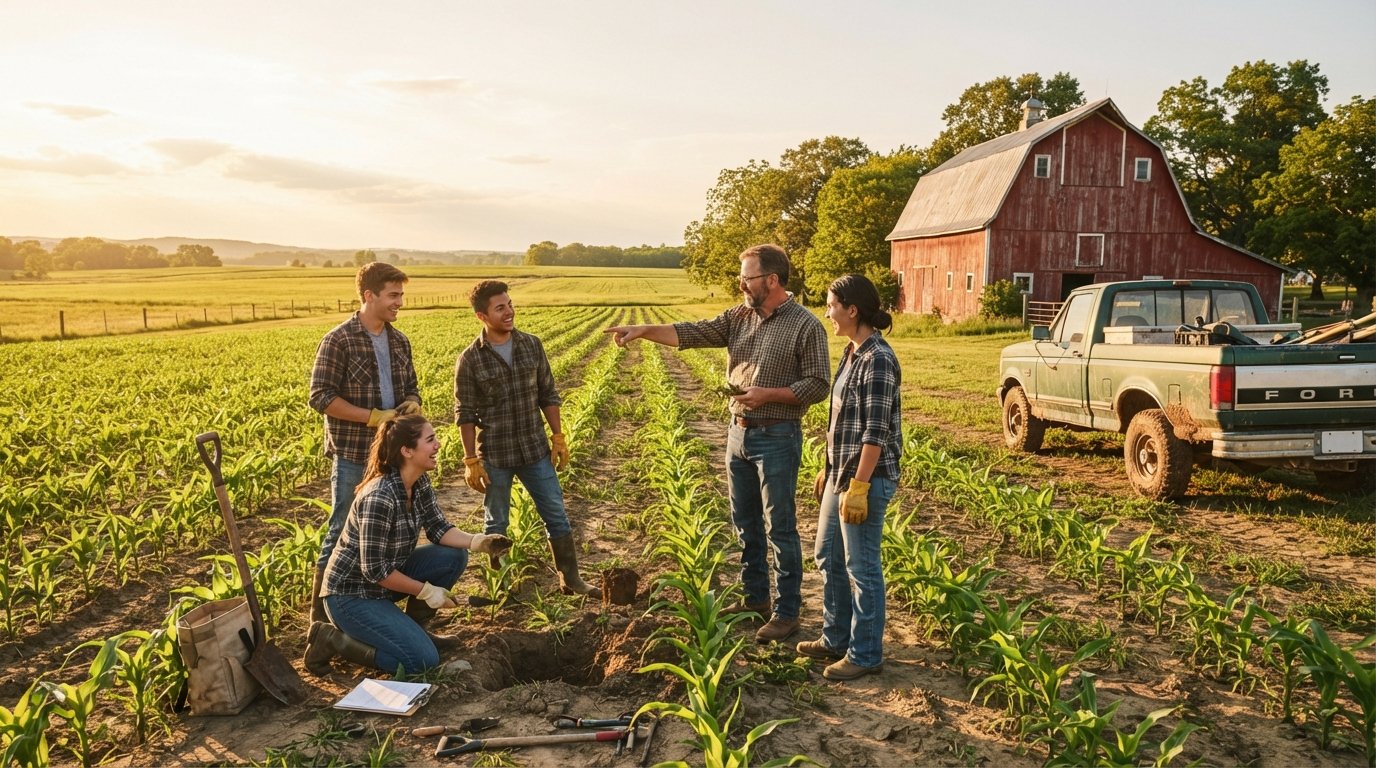
Agriculture Bachelor's Degree at Emmanuel University
A General Agriculture Bachelor's degree at Emmanuel University takes about four years on campus, blending soil science, animal husbandry, and agribusiness for real farm and industry careers.

By Frederick Hill
Choosing where to earn a four-year agriculture degree can feel like standing at the edge of a sprawling field with dozens of paths. Emmanuel University offers a General Agriculture Bachelor's degree that takes most students about four years of in-person study, blending classroom science with hands-on farm and lab work. For anyone who wants to manage a farm, work in agribusiness, or move into agricultural research, this program delivers the practical foundation employers and graduate schools expect.
This article walks through what the degree covers, who it suits, how admission works, what careers open up, and how to decide whether an on-campus agriculture program is the right investment for you. Along the way, you will see how tools like a college matching service can simplify comparing agriculture programs across states.
What a General Agriculture Bachelor's Degree Covers
A General Agriculture degree is deliberately broad. Rather than locking students into a single specialty like animal science or agronomy from day one, the curriculum builds a foundation across crop production, soil science, animal husbandry, agricultural economics, and farm management. That breadth is the point: it prepares graduates to understand an entire agricultural operation, not just one piece of it.
At Emmanuel University, the program typically runs about four years of full-time, in-person study. Students attend lectures, labs, and field sessions on campus and at partner farms or research plots. Coursework generally includes plant and soil science, animal nutrition, pest management, agricultural business principles, and electives that let students tilt toward production agriculture, agribusiness, or natural resource management.
Core subject areas usually include:
- Soil science and crop production, covering fertility, irrigation, and sustainable practices
- Animal science, including nutrition, breeding, and livestock health basics
- Agricultural economics and farm business management
- Agribusiness marketing, finance, and commodity markets
- Agricultural technology, from precision farming tools to data systems
That mix means graduates can step into roles that require both scientific literacy and business sense. A student who enjoys working with livestock but also wants to run the books will find the general track more useful than a narrowly specialized one. Similarly, someone aiming for a career in agricultural policy or extension work benefits from understanding the whole production chain.
Why the In-Person Format Matters for Agriculture
Agriculture is one of the few fields where hands-on, in-person learning is not just a nice extra: it is central to competency. You cannot learn to evaluate soil structure, handle livestock safely, or calibrate a sprayer solely from a screen. Emmanuel University structures its four-year program around labs, farm visits, and supervised fieldwork that build muscle memory along with theoretical knowledge.
In-person study also creates the peer and faculty networks that agriculture careers thrive on. Agriculture is a relationship-driven industry: farmers, co-op managers, extension agents, and suppliers rely on trust built through face-to-face interaction. Being on campus for four years gives students access to internships, mentorship, and industry events that are harder to replicate online.
That said, not every student needs a fully residential experience. Some learners start with online general education courses before transferring into a campus program, and platforms like CheapOnlineEducation help prospective students explore affordable online and campus degree options before committing. For agriculture specifically, though, the lab and field components usually require at least some in-person attendance.
Admission Requirements and Application Steps
Admission to a General Agriculture bachelor's program at a school like Emmanuel University generally follows standard four-year college requirements. Applicants submit a high school transcript, standardized test scores where required, a personal statement, and sometimes letters of recommendation. A background in biology, chemistry, or agricultural science coursework in high school strengthens an application.
The process usually moves through a predictable sequence:
- Research programs and confirm the agriculture concentration fits your goals
- Submit the application, transcripts, and any required test scores
- Complete the Free Application for Federal Student Aid (FAFSA) for financial aid consideration
- Apply for departmental scholarships and agricultural industry awards
- Attend orientation and register for first-semester courses
Students who are still weighing options can use a matching platform to compare schools by subject and state, then request information directly from programs without any obligation to apply. That low-pressure approach lets you gather details on tuition, program length, and internship requirements before making a final decision.
Career Outcomes for Agriculture Graduates
Agriculture is a resilient sector with steady demand for trained professionals. Graduates with a General Agriculture bachelor's degree move into production agriculture, agribusiness, agricultural sales, food processing, conservation, and government or extension roles. Salaries vary widely by region and role, but agricultural managers, sales representatives, and specialists often earn competitive wages with room for advancement.
Common job titles for graduates include:
- Farm or ranch manager
- Agricultural sales or account representative
- Soil conservationist or natural resource specialist
- Commodity buyer or grain merchandiser
- Agricultural extension associate or research technician
Beyond entry-level roles, the degree supports graduate study in agronomy, animal science, agricultural economics, or environmental management. Some graduates also pursue teaching certification or move into agricultural policy and advocacy. The breadth of the general track is an advantage here: it keeps multiple doors open rather than funneling students into a single career lane.
Students comparing options across fields sometimes find it useful to review how other on-campus programs are structured. For instance, a guide to the Accounting Bachelor's Degree at Albright College shows how a four-year residential format balances core coursework with professional preparation, a pattern that mirrors what you will find in a strong agriculture program.
How to Choose the Right Agriculture Program
Not all agriculture degrees are built the same. Some emphasize production, others agribusiness, and still others focus on sustainability or technology. Before enrolling, it helps to map your goals against a program's strengths. Ask whether the school has working farms, greenhouses, or research partnerships, since those resources shape how much hands-on experience you get.
Key factors to weigh include:
- Program length and whether the four-year plan fits your timeline
- Availability of internships and cooperative work placements
- Faculty expertise in the areas you care about most
- Total cost, including tuition, housing, and lab fees
- Career services and alumni networks in agriculture
Visiting campus and talking to current students gives you information no brochure can. Ask about class sizes, how often students get into the field, and what recent graduates are doing now. If you cannot visit in person, request a virtual tour and a phone call with an advisor. A matching service can also help you line up several agriculture programs side by side and request details from each one, making the comparison far less overwhelming.
Financial Aid and Paying for Your Degree
Funding a four-year agriculture degree takes planning, but several sources of aid exist specifically for students in this field. Federal grants, work-study, and student loans are available to eligible applicants through the FAFSA. Many state agriculture departments, farm bureaus, and commodity groups also offer scholarships to students pursuing agriculture degrees.
Emmanuel University and similar schools often provide merit-based scholarships and need-based aid. Departmental awards in agriculture can reduce costs further, especially for students who show strong academic performance or demonstrated interest in farming and rural communities. It pays to apply early: some scholarships have deadlines well before the general admission deadline.
Students who want to lower costs sometimes combine online general education courses with on-campus agriculture coursework, a strategy that can shave tuition without sacrificing the hands-on training that matters most. Talking with a financial aid advisor and using a program comparison tool can help you build a realistic budget before you commit.
Is a Four-Year Agriculture Degree Worth It?
For students who want management-level roles, technical expertise, or a pathway to graduate study, a four-year bachelor's degree in agriculture is usually worth the investment. It opens doors that certificates and two-year degrees often cannot, including positions in agribusiness management, research, and public policy. The in-person format at a school like Emmanuel University adds the lab, farm, and networking experiences that employers value.
For students whose goals are narrower, such as immediately running a family farm or working in a specific trade, a shorter credential might be enough. The right choice depends on your career target, your budget, and how much time you can commit. Comparing programs by subject, format, and state through a college matching service is a practical first step, and it costs nothing to request information from schools that interest you.
Agriculture remains one of the most essential industries in the country, and it needs trained, thoughtful professionals who understand both the science and the business of feeding people. A General Agriculture Bachelor's degree, usually four years of in-person study at Emmanuel University, is one solid route into that world. Explore your options carefully, ask hard questions about cost and outcomes, and choose the program that matches the career you actually want.