
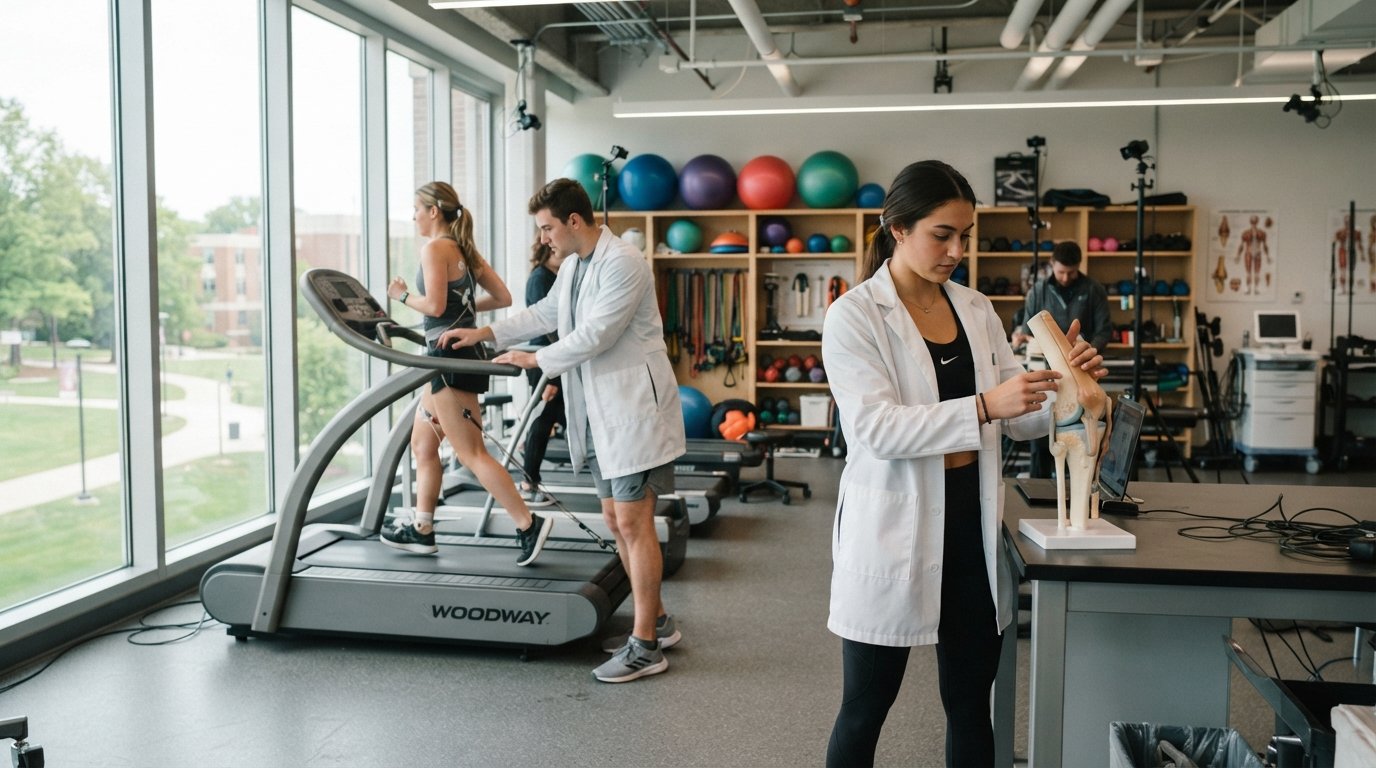
BGSU Exercise Science and Kinesiology Bachelor's Degree
The Exercise Science and Kinesiology Bachelor's degree, usually 4 years In-person at Bowling Green State University-Main Campus, blends lab science with hands-on training for careers in fitness, rehab, and sports performance.

By Frederick Hill
Choosing a major that blends biology, movement, and human performance can feel like standing at a crowded crossroads. You want a program with real labs, real equipment, and real mentors, not just a course catalog and a promise. The Exercise Science and Kinesiology Bachelor's degree, usually 4 years In-person at Bowling Green State University-Main Campus, sits squarely in that sweet spot for students who learn best by doing. Bowling Green State University, often called BGSU, has built a reputation in northwest Ohio for hands-on health and human movement education, and this degree is one of its clearest expressions.
If you are comparing on-campus options and want a program that prepares you for careers in fitness, rehabilitation, sports performance, or graduate study in physical therapy and athletic training, this guide walks through what the degree actually involves. You will see how the four-year structure works, what courses and experiences set BGSU apart, where graduates land, and how to decide whether this in-person path fits your life and budget.
What the Exercise Science and Kinesiology Bachelor's Degree at BGSU Covers
Kinesiology is the study of human movement, and exercise science is its applied cousin. Together, they examine how the body responds to physical activity, how to improve performance, and how to prevent or rehabilitate injury. At BGSU, the Exercise Science and Kinesiology Bachelor's degree, usually 4 years In-person at Bowling Green State University-Main Campus, is designed as a full-time, face-to-face program because the field demands hands-on practice. You cannot learn to assess a squat or run a stress test by watching a video alone.
The curriculum typically blends foundational science courses (anatomy, physiology, biomechanics, chemistry) with kinesiology-specific classes in motor learning, exercise physiology, and biomechanics. Students also take courses in nutrition, health psychology, and research methods, which help them understand not just how the body moves but why people adopt or abandon healthy behaviors. Because the program is in-person, labs and practical exams are built into the schedule, and you will spend time in movement science labs, fitness assessment centers, and community-based practicum sites.
One of the strengths of a four-year on-campus format is the chance to build relationships with faculty who supervise research and internships. At BGSU, students often join faculty-led projects in areas like strength and conditioning, cardiac rehabilitation, or pediatric movement. That kind of access is harder to replicate in a fully online program, which is why the in-person label matters here. If you are exploring other fields as well, you can browse related programs and compare options at TopStudents.com colleges by state, though this article focuses on the BGSU kinesiology route.
Core Coursework and Skill Development
During the first two years, you can expect a heavy dose of science prerequisites. Anatomy and physiology, general chemistry, and statistics form the backbone. These courses are challenging, but they prepare you for upper-level kinesiology classes where you apply concepts to real movement problems. For example, in biomechanics you might analyze gait using motion capture software, and in exercise physiology you might measure VO2 max in a lab setting.
Upper-level coursework usually includes:
- Exercise Physiology and Lab
- Biomechanics and Movement Analysis
- Motor Learning and Development
- Exercise Testing and Prescription
- Strength and Conditioning Principles
These classes are not just boxes to check. They build the skills employers and graduate programs expect: conducting fitness assessments, designing safe and effective exercise programs, interpreting health data, and communicating with clients or patients. Because the program is in-person, you get immediate feedback from instructors and peers, which accelerates your learning curve.
Why the Four-Year In-Person Format at BGSU Works for Kinesiology
You might wonder why a four-year in-person format matters for a field that sometimes offers online options. The answer lies in the nature of kinesiology itself. Movement is physical, social, and environmental. Learning to coach a client through a deadlift, or to help a patient regain balance after a stroke, requires supervised practice in real spaces with real people. At BGSU, that means access to campus recreation centers, adapted physical activity programs, and community partnerships.
The four-year timeline also gives you room to add a minor, complete an internship, or prepare for graduate school without cramming. Many students use the first year to adjust to college-level science, the second and third years to build kinesiology expertise, and the fourth year to complete a capstone or internship. This pacing reduces burnout and improves retention, especially for first-generation students or those balancing work and study.
BGSU's location in Bowling Green, Ohio, offers a classic college town environment with access to larger cities like Toledo and Detroit for internships and clinical placements. That geographic reach can be a hidden advantage. You might complete a practicum at a hospital cardiac rehab unit, a high school athletic department, or a private performance gym. Each setting teaches you something different about how exercise science works in the real world.
Admissions and Prerequisites for the Program
Admission to the Exercise Science and Kinesiology Bachelor's degree, usually 4 years In-person at Bowling Green State University-Main Campus, generally follows BGSU's standard undergraduate admissions process. You will submit a high school transcript, test scores if required, and an application. Because the program is science-heavy, strong performance in biology, chemistry, and math in high school can improve your readiness. Some students enter with an undeclared status and then declare kinesiology after completing prerequisite courses with a competitive GPA.
Once enrolled, you will need to maintain a minimum GPA in core courses to stay in good standing. The program may also require a CPR and first aid certification before certain practicum experiences. These requirements are not hoops to jump through; they mirror what employers and graduate programs expect. Planning ahead for them can keep your four-year timeline on track.
Career Outcomes and Graduate School Pathways
Graduates with a kinesiology degree from BGSU pursue a wide range of paths. Some go directly into fitness and wellness roles, such as personal training, group exercise instruction, or corporate wellness coordination. Others work in clinical settings as exercise physiologists, cardiac rehab specialists, or physical therapy aides. A growing number enter strength and conditioning for college or professional sports, though those roles often require additional certifications and experience.
The degree also serves as a strong pre-professional foundation. Many students use it to apply to graduate programs in physical therapy, occupational therapy, athletic training, physician assistant studies, or exercise physiology. BGSU's in-person format gives you access to faculty mentors who can write detailed recommendation letters and guide your applications. That human element is hard to overstate when competitive programs require interviews and essays.
If you are still weighing different health and science fields, it can help to compare how other majors handle clinical hours and prerequisites. For example, some students explore a Religion Bachelor's Degree at Colgate: 4-Year On-Campus to understand a different four-year residential model, even though the subject matter is unrelated. The point is that format and mentorship matter across disciplines, not just in kinesiology.
According to the U.S. Bureau of Labor Statistics, careers in exercise physiology and related fields are projected to grow faster than average in the coming decade, driven by an aging population and increased focus on preventive health. That outlook makes a well-structured bachelor's degree a reasonable investment, provided you choose a program with strong practical training and networking.
Certifications That Boost Your Resume
While the degree is your foundation, certifications can make you more competitive for specific jobs. Many BGSU students pursue one or more of the following:
- Certified Strength and Conditioning Specialist (CSCS)
- American College of Sports Medicine (ACSM) Certified Exercise Physiologist
- National Academy of Sports Medicine (NASM) Certified Personal Trainer
- Certified Cardiac Rehabilitation Professional (CCRP)
- First Aid/CPR/AED certification
These credentials signal to employers that you have met national standards beyond your coursework. Some can be earned before graduation, and BGSU faculty often help students identify the right timing so certifications complement rather than distract from their studies.
Comparing On-Campus and Online Options for Exercise Science
Online degrees have expanded access to education, but exercise science and kinesiology are among the fields where hands-on learning is essential. You cannot fully learn to conduct a graded exercise test or manual muscle testing through a screen. That is why the in-person format at BGSU remains the standard for this major. It ensures you practice skills under supervision and build confidence before entering the workforce.
That said, online programs can work well for adjacent fields like health administration, public health education, or sports management. If your goal is to become a physical therapist or athletic trainer, however, you will need a residential program that includes labs and clinical placements. BGSU's program is built for that reality.
When comparing costs and logistics, consider factors beyond tuition: housing, meal plans, transportation, and the value of networking. In-person programs often come with higher living expenses, but they also offer career fairs, alumni connections, and research opportunities that can accelerate your career. If you are exploring education financing, a neutral resource like HigherEducationAdvisor can help you compare programs and request information from participating schools without obligation.
Questions to Ask Before You Commit
Before you enroll in any kinesiology program, including BGSU's, ask specific questions that reveal how much practical training you will receive. The answers will tell you whether the program truly prepares you for your target career.
- How many hours of supervised practicum or internship are required?
- What labs and equipment are available for exercise physiology and biomechanics?
- What percentage of graduates enter graduate school or find jobs within six months?
- Are there faculty members with expertise in my specific interest area (e.g., cardiac rehab, sports performance)?
- Can I complete certifications or clinical observation hours as part of the program?
These questions matter because two programs with the same name can differ dramatically in quality. A four-year in-person degree at a school with strong labs and community partnerships will usually give you more career traction than a generic online option in this field.
Is the BGSU Kinesiology Program Right for You?
The Exercise Science and Kinesiology Bachelor's degree, usually 4 years In-person at Bowling Green State University-Main Campus, is a strong fit for students who want a structured, science-based path into health and human performance. If you thrive in hands-on environments, value mentorship, and are willing to commit to a residential college experience, this program can open doors to meaningful careers. It is less ideal for students who need fully online flexibility or who prefer a purely theoretical approach to health sciences.
Your decision should also account for your long-term goals. If you plan to apply to physical therapy or athletic training school, choose a program with prerequisites that align with those graduate admissions requirements. If you want to work in corporate wellness or fitness management, look for internships and business electives that round out your skills. BGSU's program can be tailored in these directions with careful advising.
Finally, visit the campus if you can. Talk to current students, sit in on a class, and see the labs for yourself. A four-year commitment deserves that level of due diligence. The right program will feel challenging but supportive, and it will leave you with skills you can use on day one of your career.
For students who want to explore a broader range of on-campus and online programs before making a final choice, a college matching service can simplify the search. TopStudents.com connects prospective students with sponsored schools and lets you request information with no obligation to apply or enroll. It is not a college or university, but it can help you compare options and find a program that fits your goals.