
Broadcasting Certificate at Austin Community College
Earn a Radio and Television Broadcasting Technology/Technician Certificate at Austin Community College in under two years and build real studio skills for media jobs.

By Sasha Rublev
Austin Community College District offers a Radio and Television Broadcasting Technology/Technician Certificate that can be completed in one year to less than two years, entirely in person, on campus. For students who want to work in radio, television, streaming, or audio and video production, this credential delivers hands-on training with real equipment and real deadlines. It is one of the fastest routes into a media career that does not require a four-year degree, and it is built around the exact skills that stations, production houses, and podcast networks hire for every day.
What the Radio and Television Broadcasting Technology/Technician Certificate Covers
The Radio and Television Broadcasting Technology/Technician Certificate, 1 year to less than 2 years In-person at Austin Community College District is a focused, career-oriented program. Instead of general education requirements, the curriculum centers on the technical and creative work of broadcasting: operating cameras, running audio boards, editing video, writing for air, and producing content for both traditional stations and digital platforms. Students learn in studios and control rooms, not just from textbooks, which means they graduate with a portfolio and muscle memory rather than only theory.
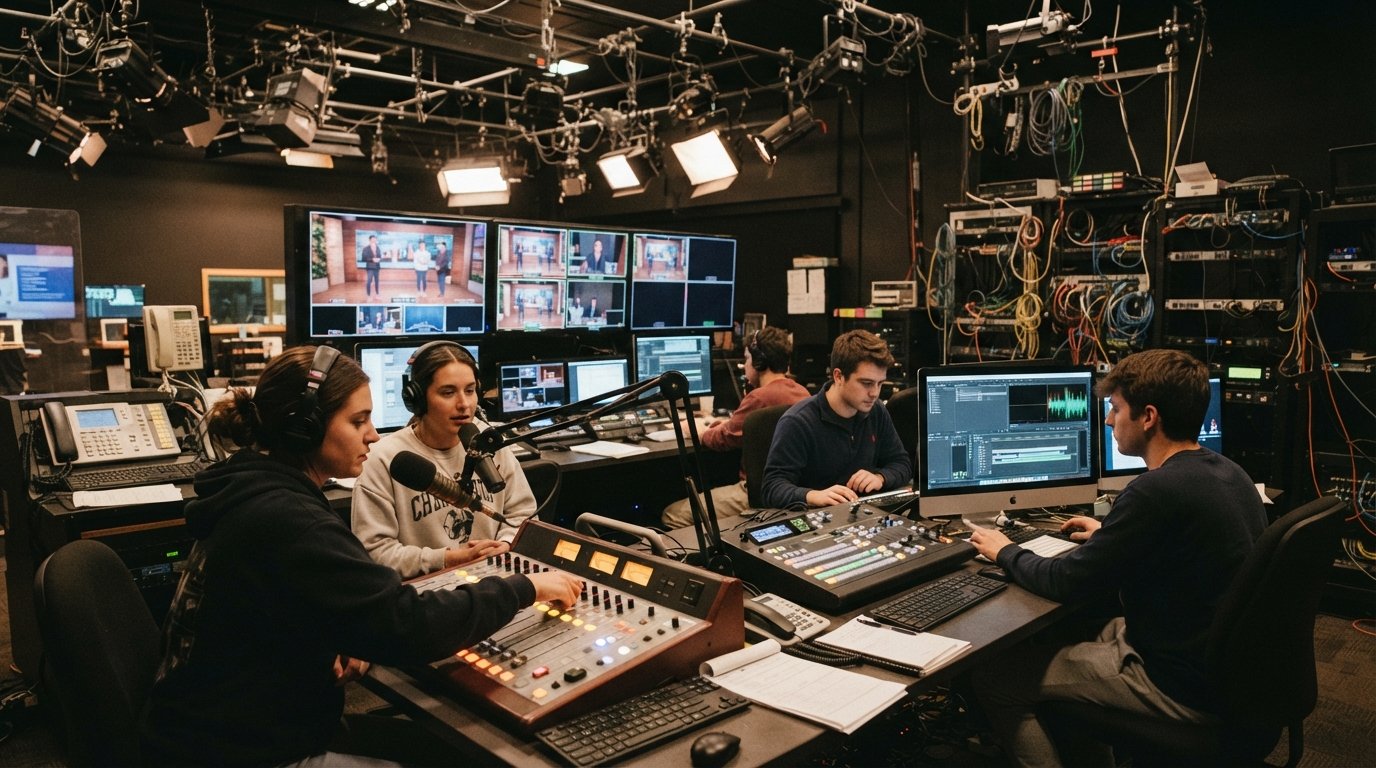
Because the program is delivered entirely in person, students get something that online programs struggle to replicate: supervised, hands-on repetition. You will thread cables, set up lights, troubleshoot a dead microphone minutes before a live show, and learn how a control room communicates under pressure. Those experiences are difficult to simulate through a screen, and employers in this field notice the difference immediately during interviews and first shifts.
Typical coursework in a broadcasting technology certificate includes audio production, video production, broadcast writing, announcing and on-air performance, media law and ethics, and editing with industry-standard software. Some programs also cover streaming, social media content, and podcast production, reflecting how the industry has changed. The exact course list at Austin Community College District can shift slightly from year to year, so it is worth checking the current catalog and speaking with an advisor before you register.
Why Choose an In-Person Broadcasting Certificate
Broadcasting is a tactile, collaborative field. A certificate completed in person at a community college puts you in the same room as instructors who have worked in radio and TV, and alongside classmates who will become your professional network. You learn to take direction, give direction, and hit a deadline as part of a crew, which is exactly what a hiring manager wants to see.
There are also practical advantages to a short, in-person certificate over a longer degree path. Consider what this format offers:
- Faster entry into the workforce: one year to less than two years, compared with four years for a bachelor's degree.
- Lower total cost: community college tuition plus the ability to work while enrolled.
- Hands-on equipment access: cameras, mixers, editing suites, and studio spaces.
- Direct feedback: instructors correct your technique in real time.
- Local industry connections: instructors and alumni often work at stations in the same market.
That combination matters because media employers frequently hire on demonstrated skill rather than the name on a diploma. A certificate holder who can walk into a studio, patch a signal, and cut a clean package has a real advantage over a graduate who has only studied broadcasting in the abstract. If you are comparing formats and want a broader look at how campus-based and online options differ, our guide on short certificate programs with hands-on training illustrates how quickly career-focused credentials can move you toward employment.
Career Outcomes After the Certificate
Graduates of broadcasting technology programs move into a wide range of roles. Some go straight to a radio station as a board operator or production assistant. Others start in television as camera operators, editors, or master control operators. A growing number find work in corporate video, live event production, church media, sports broadcasting, or podcasting, where the same core skills apply.
Entry-level pay varies by market, shift, and role, and overnight or weekend shifts often pay differently than weekday desk work. What matters more at the start is getting reps: every live show you help produce becomes a line on your resume and a reference you can call. Many broadcasters begin part-time, prove themselves, and move into full-time roles or larger markets within a few years.
It also helps to think beyond the traditional station. Companies of every size now produce their own audio and video content, from internal training videos to customer-facing podcasts. A broadcasting certificate teaches you how to make that content look and sound professional, which makes you useful to marketing departments, sports teams, schools, and nonprofits, not just to TV and radio stations.
Admissions, Cost, and How to Prepare
Community college certificate programs generally have straightforward admissions requirements: a high school diploma or equivalent, an application, and sometimes placement testing in reading, writing, or math. Because this program is in person, you should also plan for the logistics of commuting to campus and scheduling classes around work or family obligations. Many students attend part-time and stretch the certificate over three or four semesters rather than two.
Cost is one of the strongest arguments for this path. Community college tuition is typically a fraction of what a private university charges, and certificate programs often qualify for federal financial aid, scholarships, and workforce grants. Before you enroll, take these steps:
- Meet with an academic advisor to confirm the current course sequence and credit hours.
- File the FAFSA to see what federal aid you qualify for.
- Ask about department scholarships, work-study, and equipment loans.
- Tour the studios and control rooms so you know what you will be working with.
- Talk to current students or recent graduates about their job search.
Preparation also means building habits early. Start listening critically to radio and television: notice how a host paces an interview, how a newscast transitions between segments, and how sound design shapes mood. If you can, volunteer at a campus station, a community access channel, or a local event to get your first credits and contacts. Every hour behind a microphone or camera before graduation is an hour of experience you can talk about in an interview.
For students weighing this certificate against other programs, it can help to compare options side by side. Platforms such as HigherEducationAdvisor let prospective students browse sponsored online and on-campus programs, compare fields of study, and request information from schools without any obligation to apply or enroll. That kind of comparison shopping is useful when you are deciding between a broadcasting certificate, an associate degree, or a different trade altogether.
Is This Certificate the Right Fit for You?
The Radio and Television Broadcasting Technology/Technician Certificate, 1 year to less than 2 years In-person at Austin Community College District suits people who learn by doing and want to enter media quickly. It is a strong fit if you are a recent high school graduate who wants a fast route to a first job, a career changer who wants to move into production, or a working adult who needs evening or part-time classes near home.
It is a weaker fit if you want a broad liberal arts education, plan to pursue graduate study, or need a fully online format because of location or schedule. In those cases, an associate or bachelor's degree, or an online program in a related field, may serve you better. The honest test is simple: do you want to spend your week making things, or reading about them? If the answer is making things, a hands-on broadcasting certificate is worth serious consideration.
Before you commit, visit the campus, sit in on a class if you can, and ask pointed questions about job placement, equipment, and internship relationships. A program that connects students with local stations and production companies gives you a running start, and those connections are often the difference between a certificate that sits in a drawer and one that turns into a paycheck. With the right preparation and a clear goal, this credential can move you from audience member to creator faster than almost any other path in media.