
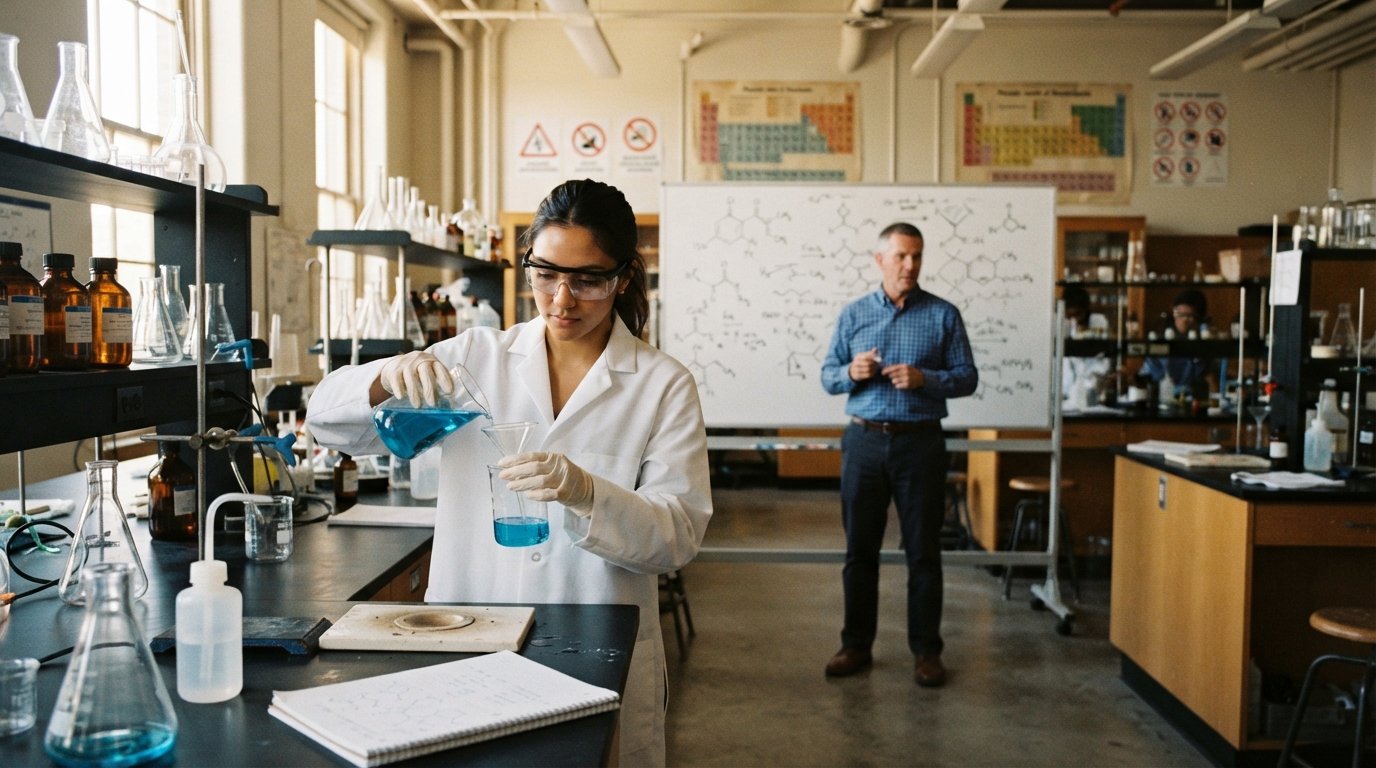
Chemistry Teacher Education Bachelor's at Lehman College
A Chemistry Teacher Education Bachelor's degree, usually 4 years In-person at CUNY Lehman College, blends lab science with real classroom training for future teachers.

By Diana Tillotson
What does it actually take to become a chemistry teacher in New York City, and why do so many aspiring educators choose a specific four-year program in the Bronx to get there? The path is more structured than many students expect. A Chemistry Teacher Education Bachelor's degree, usually 4 years In-person at CUNY Lehman College, blends rigorous laboratory science with real classroom training, and it is designed for people who want to stand in front of a high school class with both content mastery and teaching credibility. If you are weighing your options, understanding how this program works, what it costs, and where it leads can save you years of guesswork.
This guide walks through the program structure, admission expectations, field experiences, certification outcomes, and career prospects. It also explains how a college matching service can help you compare this on-campus option with alternatives before you commit. Whether you are a high school senior, a career changer with a science background, or a parent helping a student plan, the details below are meant to give you a realistic picture of the journey from freshman chemistry lab to your own classroom.
Why a Dedicated Chemistry Teacher Education Degree Matters
Many people assume that anyone with a chemistry degree can teach high school science. In practice, New York State requires specific pedagogical training, supervised field experience, and content coursework that a general chemistry major does not automatically include. A dedicated teacher education program solves that problem by integrating the two halves of the job from the start. You take the same foundational chemistry courses as other science majors, but you also take education courses that teach you how adolescents learn, how to design labs that are safe and inquiry-driven, and how to assess student understanding.
This integration matters because chemistry is one of the most challenging subjects to teach well. Students arrive with misconceptions about matter, reactions, and energy, and a teacher who only knows the science but not the psychology of learning will struggle to reach them. Programs like the one at CUNY Lehman College are built around the idea that content knowledge and teaching skill develop together, not in sequence. That is why the degree is typically structured as a four-year, in-person experience: the face-to-face lab work, the peer teaching sessions, and the supervised classroom placements all depend on being physically present with instructors and mentor teachers.
There is also a practical certification angle. New York State teaching certificates for adolescent education (grades 7 through 12) require an approved program, passing scores on required exams, and completion of specific workshops, including training related to the Dignity for All Students Act. A teacher education bachelor's degree is designed to satisfy those requirements in a coordinated way, so you are not scrambling after graduation to piece together missing components.
Inside the Four-Year Program at CUNY Lehman College
The Chemistry Teacher Education Bachelor's degree at Lehman College is a four-year, in-person program housed in the Bronx, and it draws on the college's strengths in both the natural sciences and its school of education. The general arc of the degree moves from foundational coursework in the first two years to advanced chemistry and methods courses in the junior and senior years, with field experiences layered in as you progress. Because the program is in-person, you get regular access to laboratory facilities, faculty office hours, and the kind of informal mentorship that is harder to replicate online.
The first two years typically focus on general chemistry, organic chemistry, physics, calculus, and introductory education courses. These are the gatekeeper courses for many science majors, and they are also where you build the study habits and lab skills you will rely on later. Around the sophomore or junior year, you begin taking courses in educational psychology, curriculum design, and methods of teaching science. These are not abstract lectures; they often involve designing lesson plans, practicing micro-teaching with peers, and analyzing real classroom scenarios. In the final year, you complete a supervised student teaching placement, usually in a New York City public school, where you work alongside an experienced mentor teacher.
Because the program leads to initial certification, the coursework is aligned with state standards and the edTPA performance assessment, which many teacher candidates must complete. That alignment is one of the practical benefits of choosing an approved program over a generic science degree. You are not just accumulating credits; you are checking off the specific requirements that a hiring principal or the state certification office will look for.
Admission and Transfer Considerations
Admission to Lehman College generally requires a high school diploma or equivalent, and the teacher education program has additional criteria that vary by year. Prospective students should expect to maintain a competitive GPA, complete prerequisite courses in science and mathematics, and demonstrate communication skills through essays or interviews. Transfer students with credits from other colleges can often apply those credits toward general education requirements, but science and education courses may need to be evaluated individually. Because the program is in-person and cohort-based in its upper levels, transfer students should plan carefully to avoid sequencing delays.
It is also worth noting that teacher education programs often have a secondary admission or retention process. You may enter the college as a declared student and then formally apply to the teacher education track after completing foundational courses. This is standard practice and not a sign of a problem. It exists to ensure that candidates are ready for field placements, which involve working with minors and require background checks and clearances.
Cost, Financial Aid, and the Value of an In-Person CUNY Degree
Cost is one of the most common concerns for prospective teachers, and it is a fair one. Teaching salaries in New York City are competitive compared with many parts of the country, but they still require thoughtful financial planning. CUNY schools are known for relatively affordable tuition, especially for New York State residents, and Lehman College is no exception. In-state students typically pay significantly less than out-of-state students, and federal and state financial aid can further reduce the burden. New York has specific scholarship and grant programs aimed at future teachers, and some of these include service commitments in high-need schools.
An in-person degree also has hidden costs and hidden benefits. Commuting, books, lab fees, and materials add to the sticker price, but the in-person format can reduce other costs, such as the need for separate tutoring or test preparation, because faculty and peers are available on campus. The program's structure also helps you avoid the cost of a fifth year, which can happen when students switch majors late or take prerequisites out of sequence.
For students comparing options, a useful framework is to look at total cost of attendance, not just tuition. Consider the following factors:
- In-state versus out-of-state tuition and fees for each program you are considering
- Availability of teacher-specific scholarships, grants, and loan forgiveness programs
- Transportation and housing costs for an in-person program in the Bronx or nearby
- Time to completion, since an extra semester or year adds both tuition and lost earnings
Once you have those numbers, compare them with the starting salaries and long-term earnings for teachers in the districts where you hope to work. New York City public school teachers have a defined salary schedule with step increases and opportunities for additional compensation through extracurricular roles and advanced degrees. Over a career, those increments can more than offset the upfront cost of a four-year degree, especially if you graduate with manageable debt.
Field Experiences and Student Teaching: Where the Degree Comes Together
The most distinctive part of a chemistry teacher education program is the field experience. Early field observations usually begin before student teaching, giving you a chance to sit in classrooms, watch experienced teachers manage labs and discussions, and reflect on what you see. These early experiences are often low-stakes, but they are important because they help you decide whether teaching is the right fit before you invest years in the program.
Student teaching is the capstone. In most programs, including the one at Lehman College, you spend a full semester in a classroom under the supervision of a mentor teacher and a college supervisor. You gradually take on responsibility for planning lessons, running labs, grading assignments, and communicating with families. This is where the abstract coursework becomes concrete. You learn how to handle a lab that does not go as planned, how to explain a concept a second and third way when students are confused, and how to manage a classroom of thirty teenagers while keeping safety a priority.
For chemistry specifically, student teaching includes lab safety training and practice in designing investigations that are both safe and meaningful. This is not a minor detail. Laboratory accidents are preventable, and teachers are legally responsible for student safety. A strong program will make safety protocols, chemical storage, and waste disposal part of your preparation, not an afterthought.
Certification, Exams, and the Path to the Classroom
Graduating with a bachelor's degree is not the same as being certified to teach. New York State requires candidates to complete an approved teacher preparation program, pass required exams, and complete workshops and background checks. The exact requirements can change, so students should verify current rules with their advisor and the state education department. That said, the general sequence looks like this:
- Complete the approved bachelor's program, including all required science, education, and field experience courses.
- Pass the required content and pedagogy exams, which may include the Educating All Students test and a content specialty test in chemistry.
- Complete required workshops, such as training on child abuse identification, school violence prevention, and the Dignity for All Students Act.
- Submit fingerprints and complete a background check through the state.
- Apply for initial certification through the state's online system and, once certified, apply for teaching positions through school districts.
Programs that are designed around certification make this sequence easier because the coursework and field experiences are mapped to the requirements. Students in a general chemistry major often discover after graduation that they are missing education courses or supervised teaching, which can add a year or more to their timeline. That is a key reason to choose a dedicated teacher education degree if teaching is your goal.
It is also worth thinking about where you want to teach. Certification is state-specific, and while there are reciprocity agreements, they are not automatic. If you plan to teach in New York, a New York-approved program is the most direct route. If you might move, ask your advisor how the program prepares you for certification in other states.
Career Outcomes and Salary Outlook for Chemistry Teachers
Chemistry teachers are in demand, particularly in high-need schools and districts that struggle to fill science positions. A bachelor's degree in chemistry teacher education opens doors to middle school and high school teaching, and with additional coursework or a master's degree, you can move into leadership roles, curriculum development, or school administration. Some teachers also pursue roles in informal education, such as museum education, after-school science programs, or educational technology.
Salary varies widely by district and state. In New York City, teacher salaries follow a published schedule that rewards experience and additional credits or degrees. Teachers can also earn extra pay for taking on extracurricular responsibilities, coaching, or summer programs. Benefits, including health insurance and pension contributions, are a significant part of total compensation and should be factored into any comparison. Over time, many teachers find that the stability and pension benefits make the career financially attractive, even if starting salaries feel modest.
For students who want to compare this program with other education pathways, a service like HigherEducationAdvisor's college matching tools can help you browse sponsored online and on-campus programs, compare fields of study, and request information without any obligation to apply. That kind of comparison is useful because the best program for you depends on your budget, location, and career goals. You can also look at related education programs, such as an English teacher education bachelor's at Dominican University, to see how different subject-focused education degrees are structured.
How to Decide If This Program Is Right for You
The right program is the one that fits your life, not just your career goal. A four-year, in-person degree at CUNY Lehman College is a strong fit for students who want a structured, affordable path to certification in New York City, who value face-to-face mentorship, and who are ready to commit to the lab and classroom work that teaching chemistry demands. It may be less convenient for students who need maximum flexibility, who live far from the Bronx, or who already have a science degree and are looking for a faster route to certification.
Before you apply, visit campus if you can, talk to current students and faculty, and ask specific questions about field placements, certification pass rates, and support services. Ask about the program's relationship with local schools, because strong partnerships often lead to better student teaching experiences and job connections. Ask about advising, because teacher education programs have many moving parts and good advising can keep you on track.
Finally, be honest with yourself about the work. Teaching chemistry is rewarding, but it is not easy. It requires patience, strong communication skills, and a genuine interest in helping young people understand the world. If that sounds like you, a dedicated teacher education degree is one of the most direct and reliable ways to get there. Take the time to compare your options, ask the right questions, and choose the program that gives you the best combination of affordability, support, and real classroom experience.