
Cosmetology Certificate at Erwin Technical Center: 2026 Guide
Earn a Cosmetology General Certificate in 1 to 2 years at Erwin Technical Center. Hands-on training, state licensing prep, and a fast path to salon work.

By Diana Tillotson
Choosing a career in beauty and personal care can feel like standing in front of a mirror with a thousand options reflected back at you. You know you want to work with clients, create transformations, and build a skill set that travels with you anywhere. What you may not know is exactly which credential gets you there fastest, and whether a one year certificate from a school like Erwin Technical Center is the right fit for your life, your budget, and your timeline. The Cosmetology/Cosmetologist, General Certificate, 1 year to less than 2 years In-person at Erwin Technical Center-Vs is a focused pathway that blends hands-on training with the state requirements you need to sit for a licensing exam. This guide breaks down what the program covers, who it suits, how it compares to other options, and how to decide whether to enroll.
What the Cosmetology General Certificate Program Actually Involves
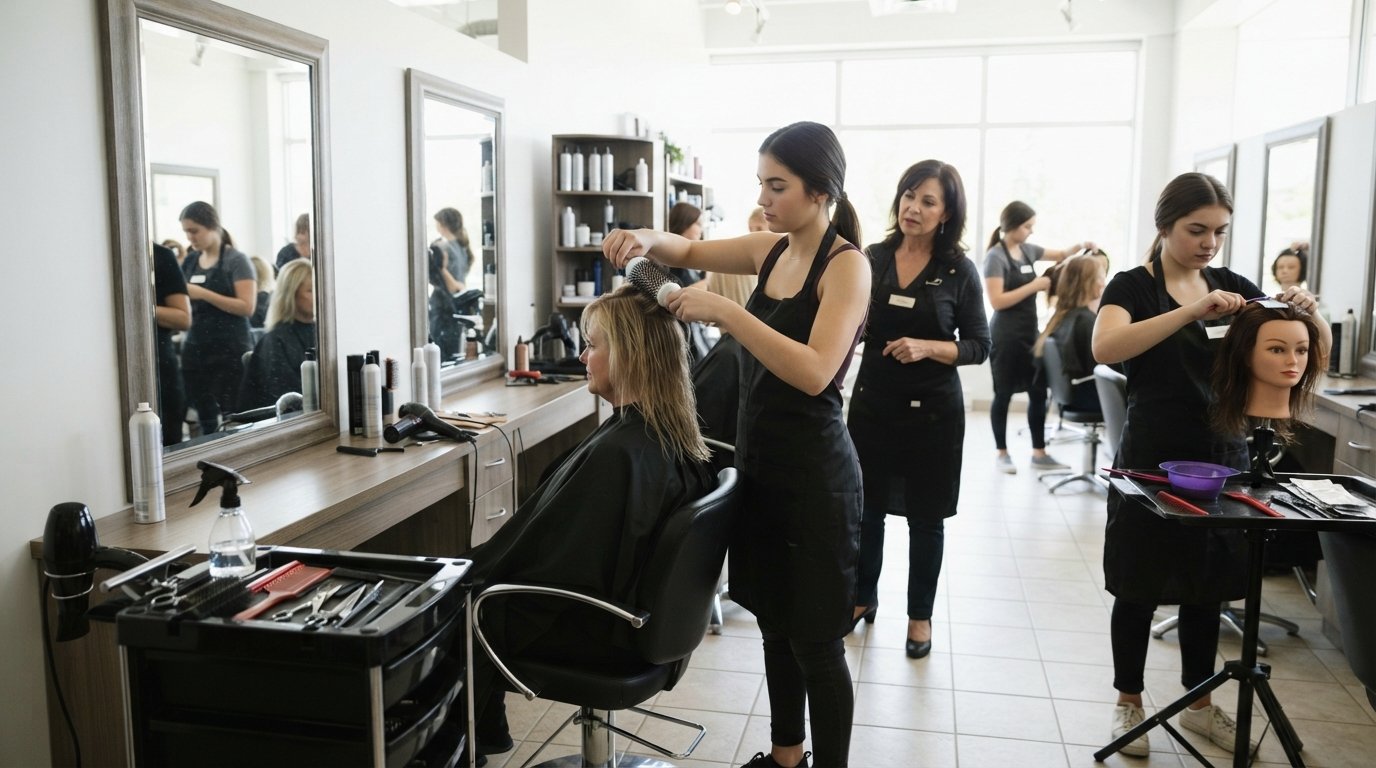
A general cosmetology certificate is not a loose collection of beauty workshops. It is a structured, clock hour based curriculum that state boards recognize as the minimum training required before you can legally work as a licensed cosmetologist. At a technical center like Erwin, that means you spend most of your time on the clinic floor, working with real clients under instructor supervision, rather than sitting in a lecture hall taking notes. The program typically runs between 1,200 and 1,600 hours depending on your state, which translates to roughly 12 to 18 months of full time study.
The core subjects you will cover include hair cutting and styling, chemical texture services such as perms and relaxers, hair coloring and lightening, shampooing and scalp treatments, manicures and pedicures, basic skin care, and facial treatments. You also take courses in sanitation, anatomy, chemistry, and salon business practices, because a licensed cosmetologist needs to understand infection control and client safety just as thoroughly as they understand a layered bob. Many programs also weave in soft skills like consultation techniques, retail product recommendations, and time management on a busy salon floor.
One important distinction: a general certificate is broader than a specialized certificate in barbering, esthetics, or nail technology. It qualifies you to perform a wide range of services across hair, skin, and nails, which can make you more versatile when applying for salon jobs or renting a booth. If you are unsure whether you want to focus on one niche, the general path keeps more doors open.
Why an In-Person Format Matters for Cosmetology Training
Cosmetology is a tactile profession. You cannot learn to hold shears at the correct angle, feel the tension of a perm rod, or judge how a client's hair responds to bleach by watching a video. The in-person format at a technical center gives you access to mannequins, live models, professional tools, and instructors who can physically guide your hands until the motion becomes muscle memory. That immediate feedback loop is difficult to replicate online, and it is one reason state boards generally require a minimum number of in-person clock hours before licensing.
In-person training also builds the interpersonal rhythm of salon work. You practice greeting clients, managing appointments, handling difficult conversations about color corrections, and keeping your station sanitary between services. These are the invisible skills that separate a graduate who struggles to retain clients from one who builds a steady book of business within months. If you are comparing formats, think about how you learn best. Some students thrive with the structure and accountability of a physical campus, while others need the flexibility of online coursework for general education classes. For the hands-on core of cosmetology, however, there is no substitute for being in the building.
If you are still mapping out your broader educational path and want to understand how certificate programs fit alongside two year degrees, a resource like the General Studies Associate's Degree guide can help you compare timelines and outcomes before you commit to a single track.
Who Thrives in a One to Two Year Certificate Program
The Cosmetology/Cosmetologist, General Certificate, 1 year to less than 2 years In-person at Erwin Technical Center-Vs attracts a specific type of student: someone who wants to enter the workforce relatively quickly, prefers learning by doing, and is comfortable in a client facing environment. High school graduates who are not interested in a four year degree often find this path appealing because it leads to a tangible license and immediate job opportunities. Career changers also gravitate toward it, especially those who have worked in retail, hospitality, or customer service and want to transfer those people skills into a creative field.
Adult learners returning to school after years away sometimes worry about keeping up with younger classmates. In practice, technical centers tend to have mixed age cohorts, and older students often excel because they treat the program like a job. They show up on time, take client feedback seriously, and network with local salon owners during their clinical hours. If you are a parent balancing childcare or a part time job, the main challenge is scheduling: cosmetology programs require consistent attendance because clock hours are tracked and reported to the state board.
Before you enroll, ask yourself a few honest questions. Do you enjoy working with your hands and standing for long stretches? Are you comfortable touching strangers' hair and skin? Can you handle a client who is unhappy with a cut without taking it personally? If the answers are yes, the certificate path is likely a strong match. If you prefer solitary, analytical work or want a degree that transfers to a wide range of industries, a different program may serve you better.
Comparing Cosmetology to Related Trades and Certificates
Prospective students often weigh cosmetology against barbering, esthetics, or nail technology. Each has a different scope of practice and licensing exam. Barbering typically focuses on clipper work, shaving, and men's grooming, and in some states the hour requirement is shorter. Esthetics concentrates on skin care, waxing, and makeup, while nail technology covers manicures, pedicures, and artificial nail enhancements. The general cosmetology certificate is the broadest of the four, which is why it takes longer and covers more ground.
Another comparison point is cost. Technical centers are often more affordable than private beauty academies, but prices vary by state and program length. You should also factor in the cost of a starter kit, which usually includes shears, combs, brushes, a mannequin, and practice supplies. Some programs include the kit in tuition, while others charge separately. Financial aid may be available for eligible students, and many technical centers accept federal grants and loans. It is worth speaking with the financial aid office before you assume the program is out of reach.
If you want to explore how different certificate and degree programs connect to career outcomes, platforms like HigherEducationAdvisor can help you compare sponsored programs and request information without any obligation to enroll. That kind of low pressure research is useful when you are still deciding between cosmetology, barbering, or a broader health and beauty track.
Licensing, State Requirements, and What Happens After Graduation
Completing the certificate is not the same as becoming licensed. After you finish your clock hours, you must pass both a written exam and a practical exam administered or approved by your state board. The written portion tests sanitation, anatomy, chemistry, and state law, while the practical portion asks you to demonstrate specific services on a mannequin or model within a time limit. Most programs build exam preparation into the final weeks, including mock practicals and review sessions.
Once licensed, you can work in a variety of settings. Traditional salons, barbershops, day spas, resort spas, and chain hair studios all hire general cosmetologists. Some graduates choose booth rental, which means you pay a weekly fee to a salon owner and keep your own client revenue. Others go into retail sales for professional beauty brands, work as platform artists for product companies, or eventually open their own salon. The certificate is a starting point, not a ceiling. Many cosmetologists later pursue advanced training in extensions, balayage, or medical esthetics to increase their earning potential.
Earnings vary widely by location, clientele, and commission structure. Entry level stylists in busy urban salons may earn an hourly base plus tips and commission, while those in high end spas can charge premium prices per service. The Bureau of Labor Statistics projects steady demand for personal care workers, though growth is sensitive to economic conditions. The key is to treat your first job as an extension of your education: build a clientele, refine your speed, and learn from senior stylists.
How to Evaluate Erwin Technical Center and Similar Programs
When you tour a cosmetology program, pay attention to more than the glossy brochure. Ask about the student to instructor ratio on the clinic floor, the condition of the equipment, and whether the school provides job placement assistance. Talk to current students about their experience with client flow. A program with a busy clinic gives you more real world practice, but it can also mean less one on one attention if the floor is overcrowded. Find the balance that suits your learning style.
You should also verify that the program is approved by your state board and that the hours transfer if you move to another state. Licensure reciprocity is not automatic everywhere, so if you plan to relocate, check the requirements in your destination state before you enroll. Ask the admissions office for a written breakdown of tuition, fees, kit costs, and exam fees. Compare that total against your expected starting salary and the time it will take to complete the program. A one year certificate that leaves you with manageable debt and a clear path to licensing is usually a better investment than a longer program with unclear outcomes.
Finally, consider the support services. Does the school help with resume writing, interview practice, and salon referrals? Does it offer evening or weekend classes for working adults? These details matter more than a fancy lobby. The best program is the one that fits your schedule, your budget, and your learning needs, not the one with the biggest advertisement.
Making the Decision That Fits Your Career Goals
The Cosmetology/Cosmetologist, General Certificate, 1 year to less than 2 years In-person at Erwin Technical Center-Vs is a practical, hands on route into a creative and people centered profession. It rewards students who show up consistently, practice deliberately, and treat every client interaction as a chance to improve. If you are ready to trade a traditional classroom for a clinic floor and want to earn a license that lets you work almost anywhere, this certificate is worth serious consideration.
Take the next step by requesting information from programs that match your location and schedule, comparing costs, and visiting a campus in person. Ask questions, watch a class in action, and talk to graduates. The more you know before you enroll, the more confident you will be when you pick up your shears for the first time as a student, and eventually as a licensed professional.