
EMT Paramedic Certificate at Cleveland State
Earn your EMT Paramedic Certificate at Cleveland State Community College in 1-2 years. Gain hands-on skills for a rewarding career in emergency medical services. Call 8772187081 for guidance.

By Adam Bennett
Cleveland State Community College offers an Emergency Medical Technology/Technician (EMT Paramedic) Certificate that can be completed in one year to less than two years of full-time, in-person study. For students who want to work on the front lines of emergency care, this program delivers the hands-on training, clinical hours, and credential preparation needed to pursue paramedic certification and licensure. The curriculum is built around real-world scenarios, from cardiac emergencies to trauma response, so graduates leave with the confidence and competence that employers demand.
The program is designed for students who thrive in fast-paced environments and want a direct path to a career in emergency medical services. Whether you are just starting your healthcare journey or you are already an EMT looking to advance, the paramedic certificate at Cleveland State provides a structured, affordable route to a high-demand role. In this article, we will break down the curriculum, admission requirements, costs, career outcomes, and how this in-person program compares to other options, so you can decide if it is the right fit for your goals.
Why Choose Cleveland State for Paramedic Training
Cleveland State Community College has a long-standing reputation for delivering career-focused healthcare education in Southeast Tennessee. The EMT Paramedic certificate is one of several stackable credentials that allow students to build their skills incrementally, starting with EMT basic and advancing to paramedic. This approach is especially valuable for working professionals who want to earn while they learn, and it aligns with the growing trend of stackable credentials that build toward degrees over time. You can explore more about how certificates and degrees connect in this guide on stackable credentials certificates and degrees.
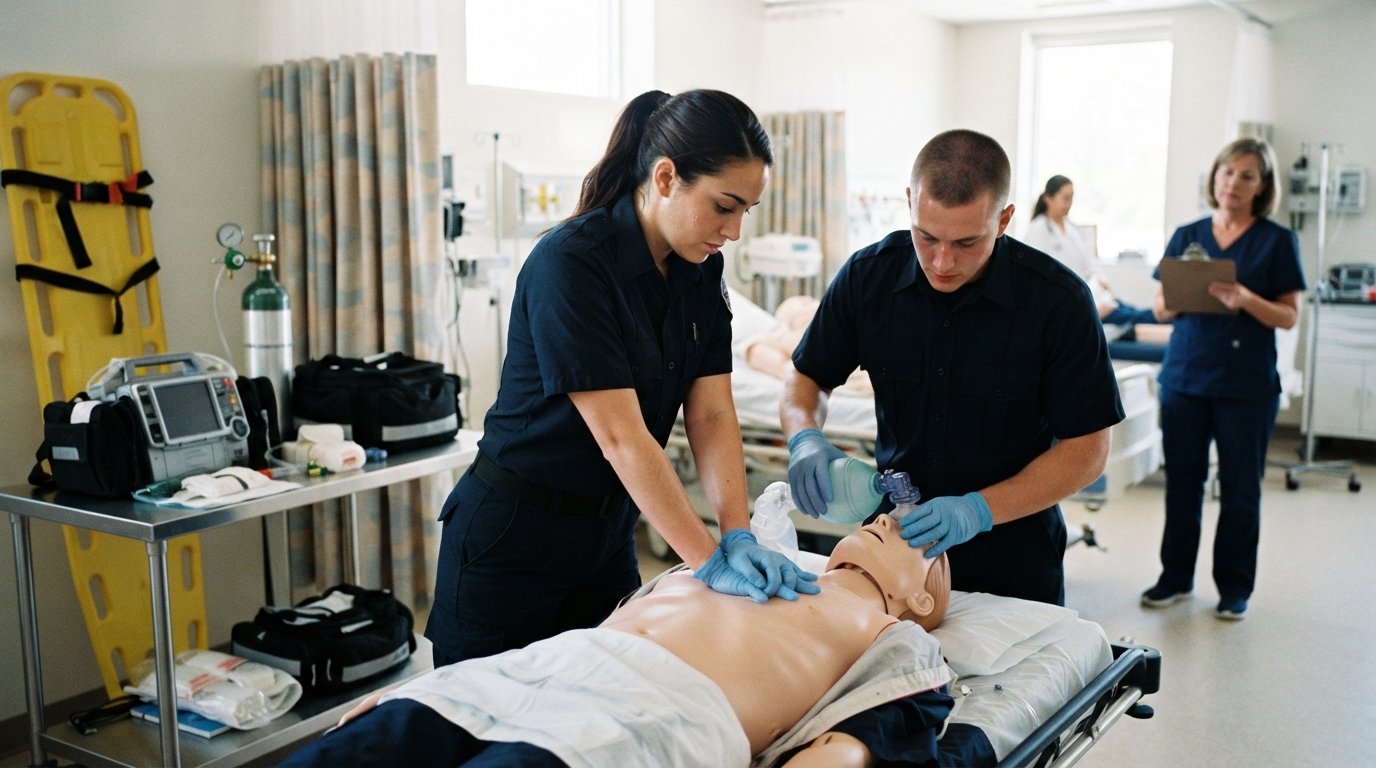
One of the biggest advantages of the program is its in-person format. Paramedic training requires hands-on practice with equipment, simulation labs, and direct patient care during clinical rotations. Cleveland State's facilities include modern simulation labs and partnerships with local EMS agencies and hospitals, giving students access to diverse clinical experiences. The faculty are experienced paramedics and EMS educators who bring real-world insights into the classroom.
Another key benefit is the program's length. At one year to less than two years, it is shorter than a traditional associate degree, allowing you to enter the workforce faster. For students who want to begin working as a paramedic quickly, this certificate is an efficient pathway. It also serves as a stepping stone if you later decide to pursue an associate or bachelor's degree in emergency management or a related field.
Program Overview and Curriculum
The Emergency Medical Technology/Technician (EMT Paramedic) Certificate at Cleveland State is a comprehensive program that covers all aspects of advanced prehospital care. The curriculum is typically divided into classroom instruction, lab skills practice, and clinical/field internships. Courses are sequenced to build on foundational knowledge, starting with anatomy, physiology, and patient assessment, then moving into advanced topics like pharmacology, cardiology, trauma management, and pediatric care.
Students can expect to take courses in areas such as:
- Advanced airway management and ventilation
- Cardiac rhythm interpretation and defibrillation
- Intravenous therapy and medication administration
- Trauma assessment and shock management
- Medical emergencies including respiratory, neurological, and endocrine conditions
- Special populations: pediatrics, geriatrics, and obstetrics
- EMS operations and incident command
In addition to classroom work, the program requires a significant number of clinical hours in hospital settings (emergency department, ICU, operating room) and field hours on ambulances with advanced life support crews. These rotations provide real patient contact under the supervision of preceptors. The hands-on component is essential for developing the critical thinking and psychomotor skills required for paramedic practice.
Upon completion, students are eligible to sit for the National Registry of Emergency Medical Technicians (NREMT) paramedic exam, which is required for licensure in most states. Cleveland State's program is accredited by the Commission on Accreditation of Allied Health Education Programs (CAAHEP), meeting national standards for paramedic education.
Admission Requirements and How to Apply
Admission to the paramedic certificate program is competitive and requires applicants to meet specific prerequisites. Most students enter the program after completing an EMT basic course and gaining some field experience, though this is not always mandatory. The typical requirements include:
- High school diploma or GED
- Current EMT basic certification (or equivalent)
- Completed application to Cleveland State Community College
- Official transcripts from previous colleges or universities
- Minimum GPA requirement (often 2.0 or higher)
- Successful completion of background check and drug screen
- Current CPR certification for healthcare providers
- Physical exam and immunization records
Prospective students should also plan to attend an information session or meet with an academic advisor to review the program sequence and clinical requirements. The application process typically involves submitting the college application, program-specific application, and supporting documents by a stated deadline. Because clinical placements are limited, early application is encouraged.
Once admitted, students must maintain satisfactory academic progress and adhere to the program's professional conduct standards. Clinical rotations may require travel to various sites, so students should have reliable transportation. The program also requires a commitment to full-time study, as courses are offered in a cohort format during daytime hours.
Costs, Financial Aid, and Scholarships
The cost of the paramedic certificate at Cleveland State is significantly lower than many private institutions, making it an affordable option for career changers and recent high school graduates. Tuition is charged per credit hour, and additional fees may apply for lab supplies, uniforms, and certification exams. Students should budget for textbooks, a stethoscope, and other personal equipment.
Financial aid is available for eligible students through federal grants, loans, and work-study programs. Cleveland State also offers scholarships specifically for health sciences students, including some earmarked for emergency medical services. To apply for aid, students must complete the Free Application for Federal Student Aid (FAFSA). The college's financial aid office can help with the process and answer questions about payment plans.
For those who want to compare costs and program options across different schools, resources like HigherEducationAdvisor can help you explore sponsored listings and request information from multiple institutions. This can be especially useful if you are considering online or hybrid programs as alternatives to the in-person format at Cleveland State.
Career Outcomes and Job Outlook
Graduates of the paramedic certificate program are prepared for immediate employment in a variety of settings, including ambulance services, fire departments, hospitals, and event medical teams. The demand for paramedics is expected to grow as communities expand and emergency medical services become more sophisticated. According to the Bureau of Labor Statistics, employment of EMTs and paramedics is projected to grow faster than the average for all occupations over the next decade.
Typical job titles for graduates include:
- Paramedic
- Firefighter/Paramedic
- Emergency Medical Technician (EMT)
- Flight Paramedic
- Emergency Department Technician
- Clinical Simulation Specialist
Salaries vary by location and experience, but paramedics in Tennessee can expect competitive wages with opportunities for overtime and shift differentials. Many employers offer benefits such as health insurance, retirement plans, and continuing education reimbursement. Advancement opportunities include supervisory roles, teaching, and specialized certifications in critical care or flight medicine.
The certificate also provides a foundation for further education. Some graduates go on to earn an associate degree in emergency medical services or a bachelor's degree in healthcare administration, public health, or emergency management. These degrees can open doors to leadership positions, education roles, or careers in disaster preparedness and public safety.
In-Person Learning Experience at Cleveland State
Choosing an in-person program for paramedic training offers distinct advantages. The hands-on nature of emergency medicine means that students benefit from direct interaction with instructors, immediate feedback on skills, and the camaraderie of a cohort. At Cleveland State, small class sizes allow for personalized attention, and the simulation labs replicate real-world emergencies, from mock car crashes to cardiac arrest scenarios.
The clinical rotations are a highlight of the program. Students work alongside practicing paramedics and nurses in busy emergency departments and on advanced life support ambulances. This immersive experience builds confidence and professional judgment. Many students receive job offers from the agencies where they complete their field internships.
Being on campus also provides access to student support services, including tutoring, advising, and career counseling. The college's location in Cleveland, Tennessee, offers proximity to both urban and rural EMS systems, giving students a broad range of clinical experiences. The program's schedule is demanding, but the in-person format ensures that students are well-prepared for the realities of the job.
Comparing Paramedic Certificate to Other Options
When considering a career in emergency medical services, you have several educational pathways. The paramedic certificate at Cleveland State is one option, but it helps to understand how it compares to an associate degree or an online program. An associate degree typically takes two years and includes general education courses, which may be beneficial if you plan to pursue a bachelor's degree later. However, the certificate is more focused and can be completed in less time, allowing you to start working sooner.
Online programs for paramedic training are rare because of the hands-on requirements, but some hybrid programs exist. These combine online coursework with in-person skills labs and clinicals. While hybrid formats offer flexibility, the fully in-person program at Cleveland State provides a more immersive experience and stronger local networking opportunities.
Another consideration is cost. Community college certificates are generally more affordable than private programs. Cleveland State's program is competitively priced, and financial aid can further reduce out-of-pocket expenses. If you are comparing multiple schools, use a college matching service like TopStudents.com to request information and weigh your options side by side.
Preparing for Success in the Program
Succeeding in the paramedic certificate program requires dedication and strong study habits. The material is rigorous, and the pace is fast. Students who do well typically form study groups, practice skills regularly, and seek help from instructors when needed. Time management is crucial, especially for those who are working part-time or have family responsibilities.
It is also important to maintain physical and mental wellness. Emergency medicine can be stressful, and the program includes content on stress management and self-care. Building a support network among classmates can help you navigate the challenges. Many students find that the relationships they build during the program last throughout their careers.
Finally, take advantage of the resources available at Cleveland State. The library, tutoring center, and career services office are there to support you. Attend every class, participate in labs, and ask questions. The more you invest in the program, the more prepared you will be for the National Registry exam and your first job as a paramedic.
Earning your Emergency Medical Technology/Technician (EMT Paramedic) Certificate at Cleveland State Community College is a smart step toward a rewarding career in emergency medical services. With its in-person format, experienced faculty, and strong clinical partnerships, the program equips you with the skills and credentials to make a difference in your community. If you are ready to take the next step, contact Cleveland State today to learn more about admission requirements and start dates. Your future in emergency care begins here.