
Licensed Practical Nurse Requirements and Pathways in the US
Explore licensed practical nurse requirements and pathways in the US, from state-approved training to NCLEX-PN licensure. Call 8772187081 for guidance.

By Diana Tillotson
Becoming a licensed practical nurse (LPN) is one of the fastest routes into a licensed healthcare career in the United States. While registered nurses (RNs) typically spend two to four years earning a degree, LPNs can complete their training in about a year and enter the workforce sooner. That speed, combined with steady demand in hospitals, nursing homes, clinics, and home health settings, makes the LPN role an attractive entry point for people who want to care for patients without committing to a lengthy degree program. Understanding the licensed practical nurse requirements and pathways in the US helps you decide whether this career fits your goals, timeline, and budget. It also helps you avoid costly detours, such as enrolling in a program that does not meet your state's licensure standards. This guide walks through the education, exam, and licensing steps, compares LPN training to other nursing routes, and explains how to choose a program that prepares you for the National Council Licensure Examination for Practical Nurses (NCLEX-PN).
What an LPN Does and Where They Work
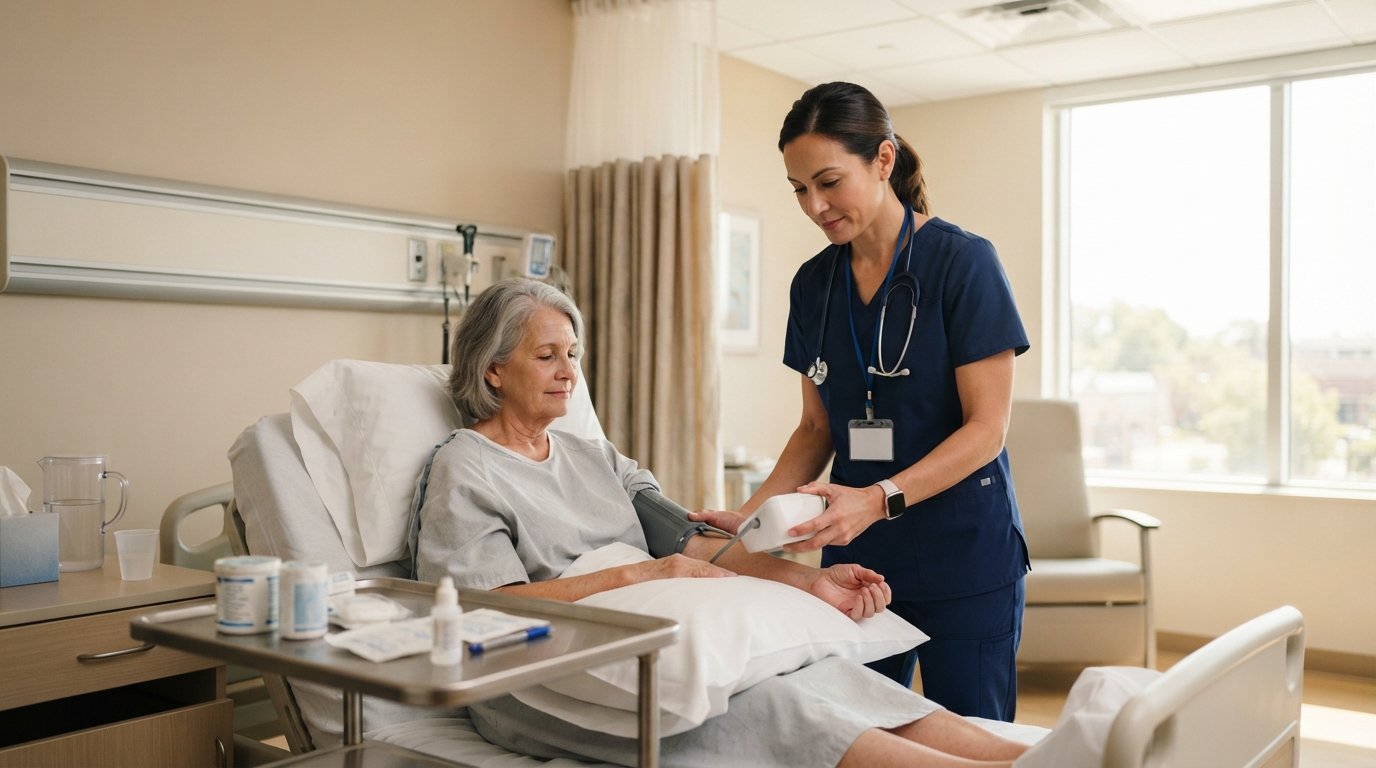
Licensed practical nurses provide basic nursing care under the supervision of registered nurses, physicians, or other advanced practitioners. Their daily responsibilities often include monitoring vital signs, changing wound dressings, administering medications, assisting patients with bathing and dressing, collecting samples for lab tests, and reporting changes in a patient's condition to the supervising clinician. Because they work closely with patients, LPNs often serve as the eyes and ears of the care team, catching subtle changes that matter for treatment decisions.
LPNs work in a wide range of settings. Nursing homes and assisted living facilities employ a large share of LPNs because these environments need consistent, hands-on clinical coverage. Hospitals hire LPNs for medical-surgical units, outpatient clinics, and long-term care wings. Home health agencies rely on LPNs to deliver care in patients' homes, and physician offices, schools, and correctional facilities also hire them. The setting you choose affects your schedule, physical demands, and pay. Hospital and travel LPN roles often pay more, while clinic and school roles may offer more predictable hours.
Scope of practice varies by state. Some states allow LPNs to perform certain tasks independently, while others require direct supervision for the same tasks. Before you enroll in a program, check your state board of nursing's rules so you know what your license will and will not permit. This step is especially important if you plan to move after graduation, because licensure is state-specific.
Core Licensed Practical Nurse Requirements in the US
The requirements to become an LPN are consistent in broad strokes across the country, but the details vary by state. In general, you must complete a state-approved practical nursing program, pass the NCLEX-PN, and apply for licensure through your state board of nursing. Most states also require a background check and may require immunizations, CPR certification, and a clean criminal record before granting a license.
Education is the first major requirement. You need a high school diploma or equivalent to enter most practical nursing programs. From there, you complete a certificate or diploma program that typically takes 12 to 18 months. Some community colleges offer an associate degree in practical nursing, which takes about two years but can provide more transfer options later. Programs combine classroom instruction in anatomy, physiology, pharmacology, and nursing fundamentals with supervised clinical hours in real care settings.
After graduation, you must pass the NCLEX-PN. This computer-adaptive exam tests your ability to apply nursing knowledge to real scenarios. It covers safe and effective care environments, health promotion, psychosocial integrity, and physiological integrity. Most states require you to submit fingerprints and pass a criminal background check as part of the licensure application. Some states also require proof of continuing education or a specific number of clinical hours before you can renew your license.
Here is a simple way to think about the main requirements you will need to satisfy:
- High school diploma or GED
- Completion of a state-approved practical nursing program
- Passing score on the NCLEX-PN
- Criminal background check and fingerprinting
- State licensure application and fee
Keep in mind that meeting these requirements does not automatically guarantee licensure. State boards review applications individually and may ask for additional documentation, such as proof of English proficiency for internationally educated applicants. If you have a criminal history, contact your state board early to understand how it may affect your eligibility before you invest time and money in a program.
Education Pathways: Certificate, Diploma, and Associate Options
There is no single path to becoming an LPN. The right pathway depends on your schedule, your budget, and how far you want to advance later. The most common route is a certificate or diploma program at a community college, vocational school, or technical institute. These programs are designed to get you into the workforce quickly. They usually take 12 to 18 months of full-time study, though part-time options can stretch the timeline.
Associate degree programs in practical nursing take longer, often about two years, but they may offer advantages. Some colleges allow you to apply credits from an associate program toward an RN degree later, which can save time and money if you decide to continue your education. If you already work in healthcare as a nursing assistant or medical assistant, some programs offer bridge or advanced standing options that recognize your prior training.
Online and hybrid programs have expanded access for students who cannot relocate or attend classes five days a week. In a hybrid LPN program, you complete theory coursework online and attend in-person labs and clinical rotations. Fully online LPN programs are rare because clinical hours must be completed in person, but hybrid formats are increasingly common. When comparing programs, confirm that the program is approved by your state board of nursing. Graduating from an unapproved program can disqualify you from taking the NCLEX-PN, no matter how good the curriculum looks.
Cost is another factor. Community college programs are often the most affordable, while private vocational schools may charge significantly more. Financial aid, scholarships, and employer tuition assistance can reduce your out-of-pocket costs. If you are exploring online and campus degree options, a matching service such as CheapOnlineEducation can help you browse sponsored programs by subject and state, compare listings, and request information from schools that fit your goals, with no obligation to apply or enroll.
Step-by-Step: How to Become an LPN
Breaking the process into clear steps makes it easier to plan your timeline and budget. The exact sequence can vary by state, but the overall flow is similar across the country. The following framework covers the most common path from initial research to active license.
- Confirm you meet basic eligibility, including a high school diploma or equivalent.
- Research state-approved practical nursing programs and compare cost, length, and clinical sites.
- Complete the program, including all required classroom hours and supervised clinical rotations.
- Apply to take the NCLEX-PN through your state board of nursing or its testing vendor.
- Pass the exam, submit your licensure application, and pay the required fees.
- Maintain your license through continuing education and renewal requirements.
Each step has its own timeline. Program applications may require transcripts, placement tests, and background checks, so start early. NCLEX-PN scheduling can also take time depending on testing center availability. After you pass, your license is typically valid for a set period, often two years, before you must renew. Renewal usually requires continuing education units (CEUs) and a fee. Some states also require CPR certification to remain current.
If you are considering an RN path later, look for LPN-to-RN bridge programs. These programs give you credit for your LPN education and experience, shortening the time needed to earn an RN credential. Many working LPNs use bridge programs to advance while continuing to work, often with employer support.
NCLEX-PN: What to Expect and How to Prepare
The NCLEX-PN is the licensing exam that stands between you and your LPN license. It is a computer-adaptive test, meaning the difficulty of each question adjusts based on your previous answers. You will see multiple-choice questions as well as alternate formats such as fill-in-the-blank, ordered response, and hotspot items. The exam covers four major client needs categories: safe and effective care environment, health promotion and maintenance, psychosocial integrity, and physiological integrity.
Preparation starts in your program. Strong study habits, consistent review, and practice questions make a difference. Many students use NCLEX-PN review books, online question banks, and study groups. Your program may also offer a capstone or NCLEX review course. Take advantage of these resources. Passing on the first attempt saves money and gets you into the workforce faster.
On test day, you will need to bring acceptable identification and follow strict testing center rules. The exam can stop after the minimum number of questions if your performance is clearly above or below the passing standard, or it can continue up to the maximum. Results are usually available within a few days, though some states post them faster. If you do not pass, you can retake the exam after a waiting period, but you will need to pay another fee and may need to meet additional requirements set by your state board.
LPN vs. RN vs. CNA: Comparing Requirements and Timelines
Understanding how the LPN role compares to other nursing roles helps you choose the path that matches your goals. Certified nursing assistants (CNAs) complete a short training program, often a few weeks to a few months, and work under the supervision of nurses. Registered nurses (RNs) complete a two-year associate degree or a four-year bachelor's degree and have a broader scope of practice, including assessment, care planning, and IV medication administration in many states.
LPNs sit between CNAs and RNs in terms of training and responsibility. The LPN path is shorter than the RN path but longer than CNA training. LPNs can perform more clinical tasks than CNAs but generally work under supervision and may have restrictions on certain procedures. If your priority is entering healthcare quickly with a meaningful level of responsibility, the LPN route can be a strong fit. If you want more autonomy, higher earning potential, and broader career options, the RN route may be worth the extra time.
Some students start as CNAs, work for a while, and then enter an LPN program. Others go straight into an LPN program after high school. There is no single right answer. Consider your financial situation, family responsibilities, and long-term goals. If you are unsure, a college matching service can help you compare programs by subject, level, and format so you can see what fits your life.
Licensure, Renewal, and Moving Between States
Licensure is handled by state boards of nursing, and each state has its own application process, fees, and renewal cycle. Once you are licensed, you must renew on time and complete any required continuing education. Failing to renew can result in a lapsed license, which may require additional steps to reinstate.
If you plan to move to another state, you will generally need to apply for licensure by endorsement. This process verifies your existing license and confirms that you met the requirements in your original state. Some states belong to the Nurse Licensure Compact (NLC), which allows nurses to hold a multistate license and practice in other compact states without obtaining additional licenses. Not all states participate, and eligibility rules apply, so check the current compact map before you rely on it.
Keep your records organized. Save copies of your diploma, transcripts, exam results, and license certificates. Having these documents ready makes endorsement and renewal smoother, especially if you move or change jobs. If you have any disciplinary history, disclose it accurately and early. Hiding information can cause delays or denials.
Choosing the Right LPN Program
Not all programs are equal. Accreditation, state approval, clinical placement quality, and pass rates matter. A program with a strong NCLEX-PN pass rate and good clinical partners can make your path smoother. Ask about job placement support, tutoring, and whether the program helps students prepare for the exam.
Consider format and flexibility. If you work full time, a hybrid or evening program may be your best option. If you need to minimize costs, a community college program may be more affordable than a private school. If you want to keep the door open for an RN degree later, look for programs with transfer agreements or bridge pathways. Visiting campuses, talking to current students, and reviewing state board approval lists can help you avoid programs that do not meet your needs. For students who want to compare multiple options in one place, a college matching platform can streamline the search and connect you with sponsored listings by subject or state.
Career Outlook and Advancement for LPNs
Demand for LPNs remains steady because healthcare services continue to expand, especially in long-term care and home health. As the population ages, the need for practical nurses in nursing homes, assisted living, and home care settings is expected to remain strong. Hospitals may hire fewer LPNs in some regions, but other settings often pick up the demand.
Advancement opportunities exist for LPNs who want to grow. You can specialize in areas such as geriatrics, pediatrics, hospice, or wound care. You can also pursue leadership roles such as charge nurse or unit coordinator in long-term care settings. Many LPNs eventually return to school for an RN degree or a specialized certificate. Some employers offer tuition reimbursement, which can make advancement more affordable.
Continuing education is part of the job. States require CEUs for renewal, and many employers provide in-service training on topics such as infection control, patient safety, and new equipment. Staying current helps you provide better care and can open doors to new roles. If you are planning your next step, researching programs early and comparing options by subject, state, and format can save time and reduce stress.
Becoming an LPN is a practical way to enter healthcare with a relatively short training period and a clear licensure path. The key is to understand your state's requirements, choose a state-approved program, prepare thoroughly for the NCLEX-PN, and stay on top of renewal and continuing education. With the right planning, the LPN credential can be a stepping stone to a stable career or a launchpad for further nursing education.