
Boise State Addiction Counseling Certificate: 12-Week Path
The Substance Abuse/Addiction Counseling Certificate at Boise State can be completed in 12 weeks to under a year, offering hands-on training for entry-level counseling careers.

By Frederick Hill
Behavioral health employers across Idaho are hiring faster than traditional degree pipelines can supply qualified counselors. If you want to enter the substance abuse and addiction counseling field without committing to a multi-year graduate program, the Substance Abuse/Addiction Counseling Certificate, 12 weeks to less than 1 year In-person at Boise State University offers a focused, accelerated route. The program is designed for working adults, career changers, and current human services professionals who need practical skills, supervised field experience, and a credential that can lead directly to entry-level roles in treatment centers, recovery programs, and community health organizations.
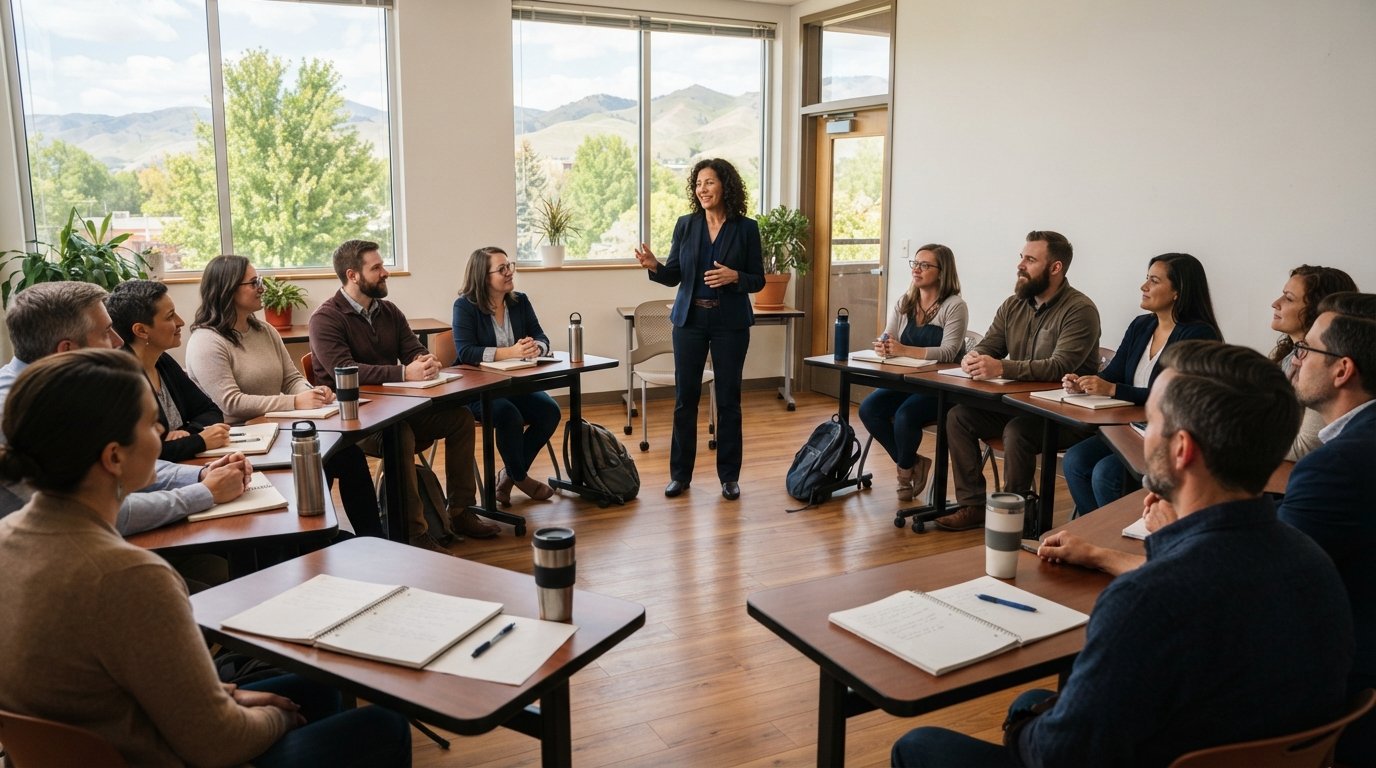
What makes this certificate stand out is its format. Many counseling credentials have moved online, but this one is delivered in person on the Boise State campus, giving you face-to-face access to faculty, cohort-based learning, and direct connections to local treatment providers. The timeline is equally appealing: you can complete the certificate in as little as 12 weeks of intensive study or spread it out over less than a year depending on your schedule and course availability. That flexibility matters if you are balancing a job, family responsibilities, or preparation for state licensure or certification exams.
Below, you will find a detailed breakdown of what the certificate covers, who it is for, how to apply, what it costs, and how it fits into the broader landscape of addiction counseling careers. You will also learn how to compare this program with other fast-track credentials and how to use college matching tools to explore related options in Idaho and beyond.
What the Substance Abuse/Addiction Counseling Certificate Covers
The certificate curriculum at Boise State is built around the core competencies that addiction counselors need on day one. You can expect coursework in screening and assessment, individual and group counseling techniques, crisis intervention, ethical and legal issues, and the neurobiology of addiction. Because the program is in person, much of the learning happens through role-plays, case studies, and live feedback from instructors who have worked in the field. That hands-on approach is especially important in addiction counseling, where rapport building and de-escalation skills cannot be fully learned from a textbook.
Most certificate programs of this length also include a practicum or field experience component. At Boise State, students are typically placed with community partners such as outpatient treatment clinics, residential recovery centers, or harm reduction organizations. This supervised experience serves two purposes: it fulfills the clinical hours that many state certification boards require, and it gives you a realistic preview of the daily work. You will leave the program with documented hours, professional references, and a clearer sense of whether you want to specialize in adolescent services, co-occurring disorders, or medication-assisted treatment.
Course delivery is intensive during the 12-week track. Students should expect to be on campus several days per week and to spend additional time on readings, group projects, and practicum hours. The less-than-one-year track spreads the same content over two or three semesters, which can be a better fit if you need to keep working full time. Either way, the certificate is credit-bearing, meaning you can often apply those credits toward a later associate or bachelor's degree in human services or psychology if you decide to continue your education.
Who Should Enroll in This Accelerated Program
The strongest candidates for this certificate are people who already know they want to work in behavioral health and who want to get there quickly. That includes individuals with a high school diploma or equivalent who are looking for a direct path into entry-level counseling aide or technician roles. It also includes professionals in adjacent fields, such as correctional officers, probation officers, nurses, social workers, and peer recovery coaches, who need formal addiction counseling training to qualify for new positions or to meet employer requirements.
Career changers are another major group. If you have worked in customer service, education, or retail and have a natural ability to connect with people in crisis, this certificate can provide the structured training and credential you need to transition into a treatment setting. The in-person format is particularly valuable for career changers because it builds a local professional network. Boise State has relationships with treatment providers throughout the Treasure Valley, and instructors often share job leads and internship opportunities with students who show up consistently and engage in class.
Finally, current students in psychology, social work, or public health may use the certificate as a specialization. Adding an addiction counseling credential to a bachelor's degree makes you more competitive for jobs in integrated care settings, where mental health and substance use treatment are delivered together. Before enrolling, check with your advisor to confirm how the certificate credits fit into your existing program and whether any courses overlap.
Admission Requirements and Application Steps
Admission to the certificate is generally less competitive than admission to a full degree program, but there are still specific requirements you need to meet. Most applicants must have a high school diploma or equivalent, and some tracks may require a background check because you will be working with vulnerable populations during your practicum. Boise State also expects applicants to demonstrate basic writing and communication skills, which may be assessed through prior coursework or a placement exam.
The application process typically involves the following steps:
- Complete the Boise State online application and select the certificate as your program of interest.
- Submit official transcripts from your high school and any colleges you have attended.
- Provide proof of immunization and complete any required background checks for field placement.
- Meet with a program advisor to confirm your start date and course sequence.
- Register for classes and complete orientation before the term begins.
Because the program is in person and cohort-based, seats are limited. Applying early is strongly recommended, especially if you want to start in the 12-week intensive track. Financial aid may be available for eligible students, and the certificate can sometimes be covered by workforce development grants or employer tuition assistance. Ask the program coordinator about payment plans and scholarship options before you assume the cost is out of reach.
Cost, Financial Aid, and Return on Investment
Certificate programs are usually more affordable than degree programs, and this one is no exception. Tuition is charged per credit, and the total cost depends on whether you complete the certificate in one intensive term or spread it over several semesters. Additional expenses may include textbooks, background checks, and transportation to practicum sites. Compared with a two-year associate degree or a four-year bachelor's, the certificate offers a lower-cost entry point into the field.
Return on investment depends on your goals. Entry-level addiction counseling positions in Idaho often pay hourly wages that are modest but stable, and many employers offer benefits, supervision toward advanced certification, and opportunities for advancement. If you use the certificate to move from an unrelated job into a behavioral health role, the pay increase and career satisfaction can justify the cost quickly. If you plan to continue to a degree, the certificate credits may reduce the total time and money you spend on that later program.
Prospective students should also compare this program with other fast-track credentials. For example, trade and transportation certificates can also be completed in under 12 weeks, but they lead to very different careers. Our guide to a Truck and Bus Driver Certificate in Under 12 Weeks at Flagler Tech shows how accelerated training works in another field, which can help you evaluate whether a short, intensive format is right for you. The key is to match the credential to the career you actually want, not just to the fastest available option.
In-Person Learning at Boise State: Advantages and Logistics
Choosing an in-person certificate over an online one is a deliberate trade-off. The main advantage is direct interaction with instructors and peers. In addiction counseling, subtle nonverbal cues matter, and practicing counseling skills in a live classroom with immediate feedback is difficult to replicate online. You will also build a local network of classmates who may become colleagues, referral sources, or job leads. Boise State's campus resources, including the library, career services, and student support offices, are available to certificate students in many cases.
The logistics require planning. You will need reliable transportation to campus and to practicum sites, and you should confirm that your work schedule allows for daytime classes and field hours. The 12-week track is intense, so avoid scheduling major life events during that period if possible. The less-than-one-year track is more forgiving but still requires consistent attendance. If you are unsure which format fits, speak with an advisor about starting with one or two courses and then accelerating if your schedule allows.
Another consideration is licensing and certification. Idaho has specific requirements for addiction counselors, and the certificate is designed to align with those requirements. However, completing the certificate does not automatically grant a license. You will still need to pass the appropriate exam and complete the required supervised hours, which may extend beyond the certificate timeline. Ask the program coordinator for a clear map of the post-certificate steps so you can plan accordingly.
Career Outcomes and Next Steps After Completion
Graduates of the Substance Abuse/Addiction Counseling Certificate, 12 weeks to less than 1 year In-person at Boise State University typically pursue roles such as substance abuse counselor aide, behavioral health technician, case manager, peer support specialist, and residential treatment staff. With additional experience and certification, you can move into lead counselor, program manager, or clinical supervisor positions. Some graduates use the certificate as a stepping stone to a bachelor's degree in social work or psychology, which opens doors to licensed clinical social work and other advanced roles.
The job market in Idaho and across the United States remains strong for addiction and behavioral health workers. The opioid crisis, expanded telehealth services, and increased insurance coverage for mental health and substance use treatment have all contributed to sustained demand. Employers value candidates who have both formal training and real-world practicum experience, which is exactly what this certificate provides. Networking during the program is critical: attend job fairs, stay in touch with your practicum supervisor, and ask instructors about openings they hear about.
If you want to explore related programs or compare schools, a college matching service can save time. HigherEducationAdvisor.com helps prospective students browse sponsored online and on-campus degree and certificate programs and request information from participating schools without any obligation to apply or enroll. It is not a college or university and does not grant credit, but it can be a useful starting point for building a list of options that fit your budget, schedule, and career goals. Use it alongside direct research on Boise State's program page and conversations with advisors.
Comparing the Certificate with Other Education Pathways
It helps to place this certificate in context. A bachelor's degree in psychology or social work typically takes four years and costs significantly more, but it opens the door to licensed clinical practice and higher earning potential over time. An associate degree takes about two years and can be a middle path. The certificate is the fastest route to entry-level employment, but it is not a substitute for a degree if your long-term goal is private practice or clinical supervision.
There are also shorter micro-credentials and continuing education courses in addiction studies, but they may not carry the same credit or recognition as a university certificate. Boise State's program is credit-bearing and regionally accredited, which gives it more weight with employers and certification boards. When comparing options, look at three things: whether the program is accredited, whether it includes a practicum, and whether graduates are eligible for state certification. A program that lacks any of these may cost less upfront but deliver less value in the job market.
Finally, consider location and format. If you live near Boise and can attend in person, this certificate offers advantages that online programs cannot match. If you live elsewhere, you may need to relocate temporarily or choose an online alternative. The right choice depends on your circumstances, but for students in the Treasure Valley who want a fast, hands-on entry into addiction counseling, Boise State's certificate is one of the most direct paths available.
Taking the next step starts with a simple action: contact the program, request information, and ask about start dates, costs, and practicum placement. The field needs compassionate, well-trained counselors, and this certificate is designed to get you there efficiently and responsibly.